
The physical infrastructure that is the backbone of our economic wellbeing is deteriorating faster than expected, and the bill is coming due. In 2025 global infrastructure investment needs were estimated to be $11.5 trillion over 10 years. More than half of America’s 623,000 bridges are rated fair or poor by the American Society of Civil Engineers and the group estimates the bridge funding gap alone to be $373 billion over the next decade. Coastal infrastructure in Europe faces an estimated $835 (€722) million in damage each year, with that number expected to rise to $1,281 (€1,108) million under just 1.5°C of warming. Meanwhile, emerging economies need an estimated $604 billion invested in ports alone by 2035.
Much of this maintenance cost is driven by corroding rebar which leads to cracking and crumbling concrete. Climate change makes corrosion worse. Higher atmospheric CO₂ accelerates carbonation of concrete, which accelerates the internal steel’s corrosion. Meanwhile sea-level rise pushes saltwater into infrastructure that was never built for coastal exposure. Storm surge soaks reinforced elements more often and for longer and coastal subsidence puts assets into more regular contact with saltwater. Cold snaps in regions that historically didn’t experience them drive more de-icing salt onto roads and bridges each winter.
Epoxy-coated rebar has been the dominant “corrosion-resistant” solution, but construction handling often nicks the coating, exposing the steel and creating a hotspot of corrosion that spreads quickly under the surrounding coated area. This causes the coated rebar to rust faster than an uncoated bar and has left us with the massive infrastructure maintenance bill we face today.
The Florida Department of Transportation (DOT) found that epoxy-coated bridge decks needed rehabilitation at 20 to 30 years rather than the 75 to 100 they were specified for. Florida and several other coastal DOTs have since moved off epoxy for new construction, but they have few viable alternatives. Solid stainless-steel rebar eliminates corrosion but at five to eight times the price of carbon steel it is cost prohibitive. Standard carbon steel is more cost effective itself, but requires higher concrete costs to create a thicker protective cover and even then it has a shorter expected service life.
Fiberglass rebar, or fiber-reinforced polymer rebar, has emerged as another corrosion-resistant alternative, but it is expensive, more brittle than steel, and requires specialized handling and design specifications.
Allium provides the missing solution, creating cost-effective corrosion-resistant rebar.
Allium co-founders Steve Jepeal and Sam McAlpine spent their MIT PhDs designing cladding for nuclear reactor cores, where a metallurgical bond has to survive radiation, heat, and chloride attack for decades. Working with leading steel players such as Tata Steel, they recognized the impact the technology could have on civil-infrastructure and built Allium in response.
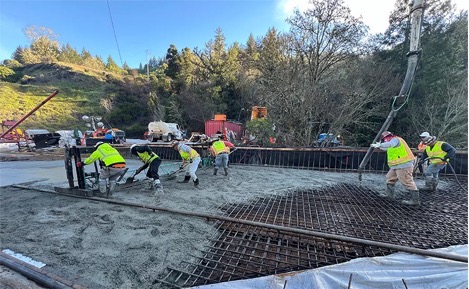
Allium patented a laser-deposition cladding process that bonds a thin stainless-steel layer onto a carbon-steel billet (a large rectangular semi-finished steel block) before it’s hot rolled into a rebar, and the stainless steel layer becomes an integral part of the finished rebar. Every surface that salt can reach is stainless, while the core remains low-cost carbon steel. The service life of the project becomes 125-plus years, with the same reliability and durability as pure stainless rebars, but at a much lower cost point that is competitive with existing corrosion resistant rebar options.
The bar handles, bends, ties, and bonds to concrete the same way as standard rebar. It’s a drop-in solution that engineers can substitute into a design drawn for standard carbon-steel or epoxy-coated rebar without recalculation. The billets are processed into rebar using standard mill equipment with no retooling needed.
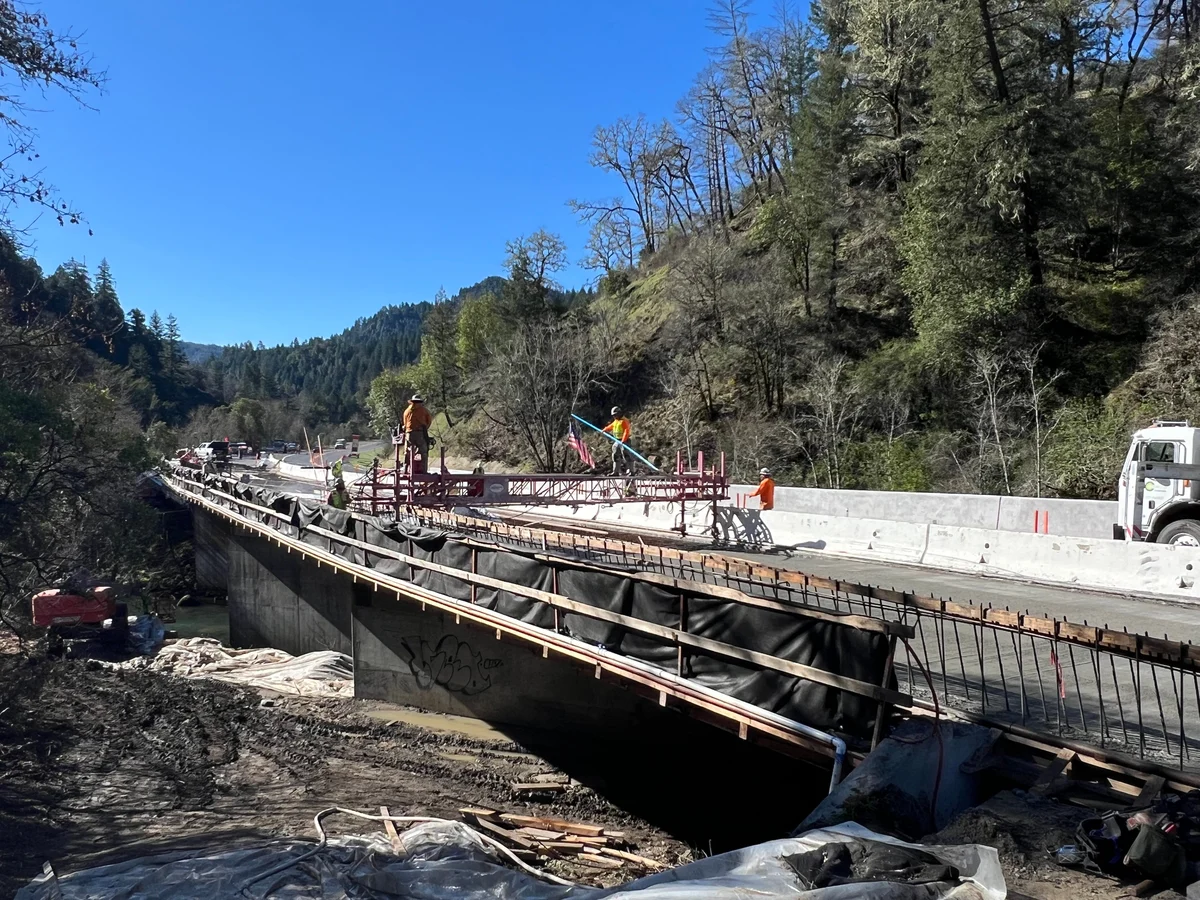
Since its founding in 2024, Allium has already installed its stainless-clad rebar on a bridge in California and a marina in Florida. More projects are underway in these and other states.
Having an excellent technical solution is one thing, but commercialization is another.
The Allium team has laid the foundation for widespread adoption of its technology, both with technological rigor and a strategic go-to market plan. Allium is currently the only manufacturer qualified under AASHTO M 329M, the national standard governing stainless-clad reinforcing bars. Allium’s underlying technology can be applied across a range of steel products and structural sections, so the potential future applications are vast, stretching beyond rebar.
Integrating closely with mills makes the adoption process smooth, removing the barriers that usually keep new construction materials from scaling. Engineers specify it without redesign, mills produce it without retooling, and the rebar provides the best cost-benefit balance in the market.
With Allium, we see an innovation that addresses an urgent need for infrastructure. It’s an opportunity to solve an acute, current pain point that’s only getting worse with climate change and to make sure infrastructure globally is truly built to last.