
A high-performance alternative to copper
The electrified economy runs on copper. For over a century, copper has been the only material that could deliver conductivity at the scale, reliability, and cost that industry required. Hence copper became synonymous with the infrastructure of modern life: the buildings we construct, the vehicles and devices we depend on, the datacenters powering AI, and the energy generation, distribution and transmission infrastructure tying it all together.
The reliance on copper has led to the development of a massive global supply chain from mines to processing plants to end products. This supply chain is facing multiple constraints, both on the upstream extraction side as well as the geopolitics and logistics of processing. Among other risks, water availability threatens our collective ability to produce the copper that builds the future.
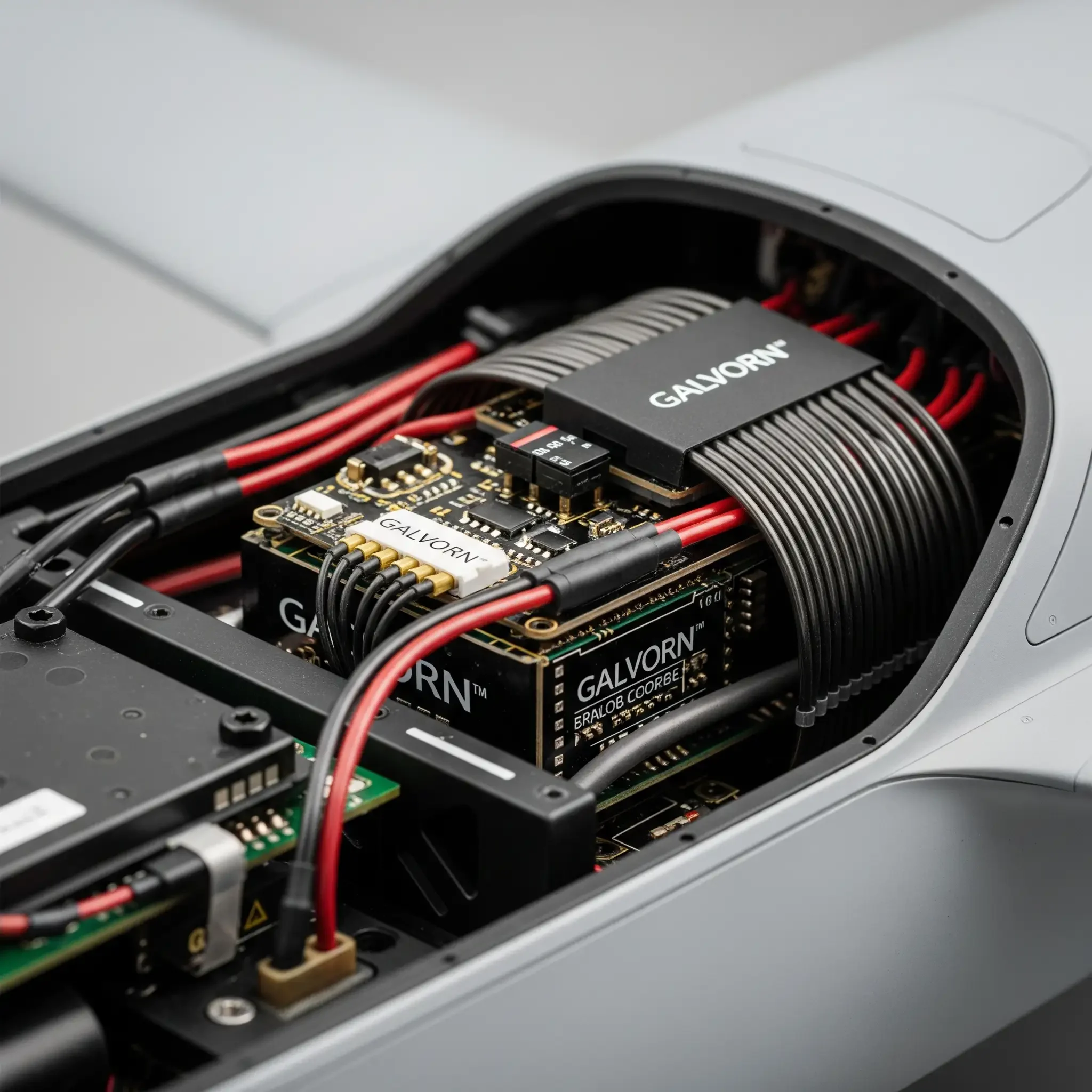
DexMat solves these problems with Galvorn, a material derived from nano-scale tubes of carbon atoms called carbon nanotubes converted into durable yarns and wires.
—
Global demand for copper is expected to surge 50% over the next 14 years. Meanwhile, global average ore grades, or the copper content in each ton of rock mined, have fallen 40% since 1991. For example, Escondida, the largest copper mine in Chile has had a 80% drop in ore grade from 2.5% from the 1990s down to 0.5% by 2022. Now they have to move almost 190 tonnes of ore for 1 tonne of copper. When including waste rock, that number increases to almost 500 tonnes of rock for 1 tonne of copper.
New mining projects offer little relief. Since 2020, brownfield project expansion, or expansions on existing mine infrastructure, capex costs have increased 65%, and of all the copper deposits discovered in the last 35 years, only 5% have been in the last decade. Permitting obstacles, decade-long development timelines, rising project costs and other market risks have prevented substantial new project development. The result is a widening deficit: the IEA projects copper supply could fall 30% short of demand by 2035.
Another critical headwind for copper production is declining water availability.
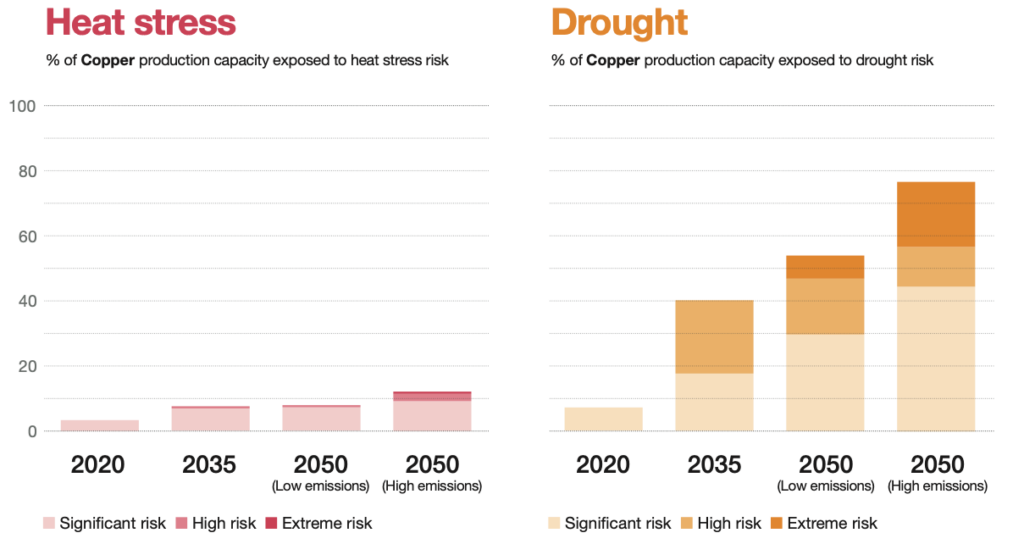
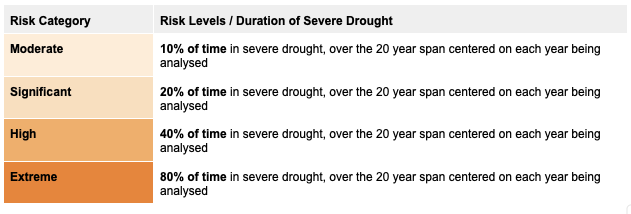
Copper processing is intensely water-dependent: requiring water at every stage, from the chemical baths that separate minerals from rock to the cooling and transport processes that follow. However, climate projections show water scarcity expanding dramatically across key production regions. According to PwC’s analysis of climate risk across nine key commodities, almost 10% of global copper production already faces significant or greater drought risk today. Even under an optimistic, low-emissions scenario, that figure rises to 54% by 2050. Under a high-emissions scenario, the percentage of global copper production exposed to significant or higher drought risk reaches 77%, with 20% of total production at extreme risk of drought (Fig. 1 below).
Fig. 1: PwC Analysis of Copper Production Capacity Exposed to Drought Risk
Source: PwC, Climate Risk to Nine Commodities, 2024
In addition to headwinds limiting production at the point of extraction, copper procurement also includes midstream supply chain risks due to the concentrate having to be transported across the world for smelting, conversion to cathode and then to end products, finally to be shipped to their destinations. This adds to the logistics, cost and carbon footprint as well as geopolitical complexity because China controls the majority of the world’s refining capacity necessary to convert copper into end products.
DexMat provides an alternative solution called Galvorn, a material derived from carbon nanotubes and engineered for industrial-scale applications.
Carbon nanotubes are tube-shaped nanomaterials composed of pure carbon atoms arranged in honeycomb-like sheets. They are currently used as conductive additives in lithium-ion batteries, structural reinforcements in composites, and thermal interface materials in high-density electronics.
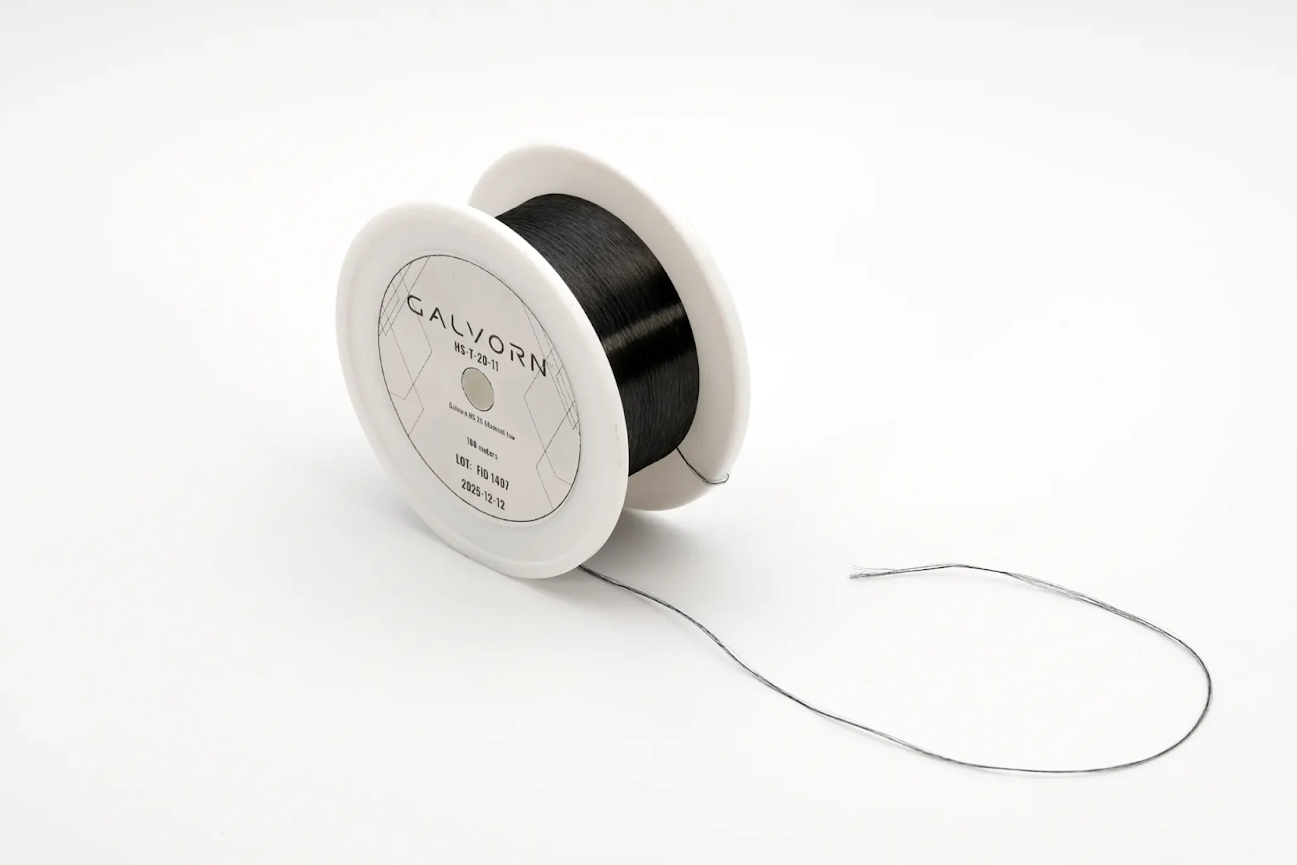
DexMat uses a proprietary, patented process co-developed by co-founder Matteo Pasquali, PhD and Nobel laureate, Rick Smalley, PhD, to convert carbon nanotubes into yarns and wires. These wires are highly durable, flexible, light weight and conductive, and in many use-cases can be a drop-in replacement for copper.
Figure 2. Galvorn wire
Source: DexMat
Compared to copper, Galvorn is:
- 80% lighter for the same volume and 50x stronger by weight. This unlocks lighter-weight electric systems for high-performance aerospace and automotive customers, and means that a ton of Galvorn wiring stretches much further than a ton of copper wiring.
- 1000x more flexible, enabling new engineering designs optimizing footprint and performance.
At scale, we are convinced that Galvorn will be able to substantially reduce upstream and midstream complexity, increasing buyers’ resilience to tariffs, trade disruptions, declining ore grades, and growing water scarcity. By changing the input from mined metals to carbon nanotubes produced from natural gas feedstock, Galvorn can be produced in the US, offering a more resilient, on-shored alternative, with a substantially lower lifetime CO2 intensity than copper.
Galvorn’s properties also increase the resilience of physical systems to extreme conditions. Copper wires lose conductivity as temperature increases, reducing energy efficiency and posing grid stability risks, accompanied by thermal expansion and sagging of power lines, increased risk of electrical fires, and degraded performance in electric motors and generators. Galvorn maintains its maximum, safe current-carrying capacity (ampacity) in 50°C (122°F) heatwaves, preserving uptime for air conditioning, data centers, electric vehicles, and other critical systems. Galvorn cables also have the capability to maintain tensile strength and conductivity in wildfire conditions of over 800°C.
Our team has known DexMat CEO Bryan Hassin for years, first as a successful deeptech entrepreneur, then the cofounder and CEO of Third Derivative, the world’s largest climate-tech accelerator. With Brian at the helm together with Dr. Matteo Pasquali and the rest of the technology team, we saw a generational technology advancement led by an experienced, disciplined, commercially astute founding team.
DexMat has already scaled production 20x, reduced costs by more than 90%, and built traction with key customers replacing copper in aerospace and automotive signal wiring, where space and weight constraints are most acute. That commercial foundation opens an expansion path into data center signal wiring, energy transmission infrastructure, and even structural applications where Galvorn’s strength-to-weight ratio creates new design possibilities.
Galvorn has many other potential applications beyond copper wiring.
DexMat removes upstream constraints and expands what’s possible for end users by manufacturing at scale a novel platform material, engineered for the demands of real-world, industrial-scale applications.
This is exactly what we are looking for at Tailwind Futures. Resilience not as a price to be paid, but as a foundational improvement in performance.
You can learn more about DexMat at dexmat.com.
Carson Mayo contributed to this blog.