|
|
|
|
|
|
|
|
Tailwind Futures invests in technologies that help corporations futureproof the infrastructure, workforce, and supply chain of today and tomorrow.
|
 |
|
|
From Lab to Market: Genomics for Climate Resilience
|
|
|
In this fourth installment of our Resilience Game Changers series, we turn to genomics and gene editing. Sequencing a human’s genome has rapidly transformed from a project that took an international cohort 13 years and about $2.7 billion during the Human Genome Project to something that can happen in a few hours for a few hundred dollars. Sequencing of entire genomes, including human, crops, livestock, pests and others, has unlocked opportunities to identify the genes responsible for certain diseases or resilient traits, examine how they interact with the rest of the genome and create targeted interventions.
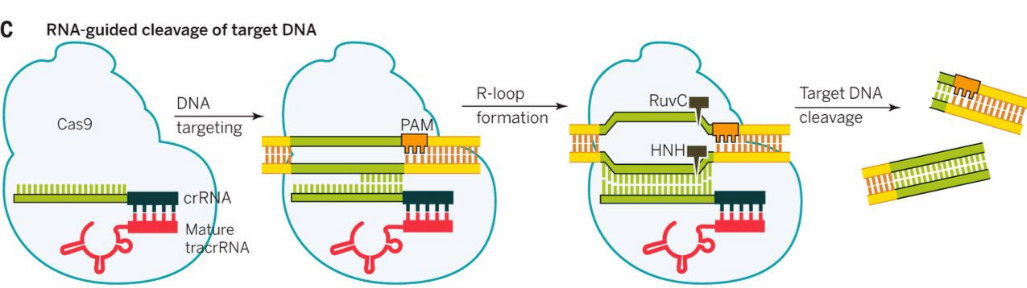
In 2014, Jennifer Doudna of UC Berkeley and Emmanuelle Charpentier published “The new frontier of genome engineering with CRISPR-Cas9” announcing their discovery of how to use the CRISPR-Cas9 gene expression system to significantly improve the efficiency and efficacy of gene editing. Cas9 is a protein used by bacteria to seek intruding viral genes and destroy them. The researchers identified that Cas9 can be engineered to cut specific portions of DNA, guided by RNA. This unlocked a flurry of academic and commercial research examining the implications and ethical considerations of this discovery.
|
|
Illustration of the Cas9 gene cutting process
|
 |
|
Image Source: Jennifer A. Doudna, Emmanuelle Charpentier,The new frontier of genome engineering with CRISPR Cas9.Science346,1258096(2014).DOI:10.1126/science.1258096
|
|
|
|
Genome sequencing and gene editing can improve climate resilience across agriculture, health and ecosystems such as in coral reef restoration. In agriculture, Doudna’s lab is among those examining approaches to use the CRISPR system to improve disease resistance in staple crops. From a company engineering crops to provide signals when they’re infected with fungi and another engineering nitrogen fixing microbes to eliminate the need for chemical nitrogen fertilizer to a team leveraging AI genomics modeling to breed for low-input resilient crops multiple startups are innovating in this space.
This technology has also led to breakthroughs and ongoing research related to controlling vector-borne diseases. Researchers use genomics to identify the genes responsible for disease transmission in pests such as mosquitoes and then examine ways to control this transmission, such as releasing engineered sterile males or mosquitoes who can’t transmit the disease. Flyttr (previously Oxitec) has been commercializing these approaches for over a decade. While these approaches face challenges in gaining approvals and acceptance, they hold potential to build resilience to vector-borne diseases that are expanding their ranges as the climate changes.
Our forthcoming report on Resilience Game Changers will map the broader landscape of hard-tech academic research and development relevant to adaptation and resilience and examine pathways to commercialization. Reach out to share a technology you think we should feature!
|
|
Join Us for London Climate Action Week
|
|
Panel on Building Resilience: The Future of Infrastructure and Infratech
|
|
|
Monday, June 22, PATRIZIA offices in London, 4:00 PM – 6:00 PM
|
|
|
|
Infrastructure is built to last decades, but the conditions it was designed for are shifting. For the investors, insurers, and operators who own and back this infrastructure, resilience is becoming a driver of asset value, underwriting risk, and long-term returns.
|
|
|
|
Join us for a panel and networking event we’re hosting with SFV Capital during London Climate Action Week. The discussion will explore how infrastructure asset owners should be thinking about resilience: where the real risks sit, how they get priced, and where technology is starting to enable resilience that brings value. Bring your questions and come compare notes with peers across infrastructure investment, insurance, venture, and the startups building what comes next.
We’ll plan to kick off the panel at 16:30 with the opportunity to grab a drink and network before and after the panel. SFV’s Matthew Chagan will moderate the discussion and Tailwind’s Emilie Mazzacurati will join speakers from an infrastructure owner and startup innovating in this space.
|
|
Register
|
|
|
|
|
|
|
|
As the 2026 World Cup begins at stadiums across the U.S., Canada and Mexico, MSCI ranked every host venue by exposure to heatwaves, rain-induced flooding, lightning and subsidence. While stadiums in Kansas City, Los Angeles, Miami and San Francisco are among the most exposed to multiple hazards, exposure varies greatly across stadiums and different hazards. As the games unfold we’ll see how different climate risks and resilience measures affect operations at these sites.
|
|
|
|
|
|
This analysis from J.P. Morgan unpacks the multifaceted impacts of supply chain disruptions and extreme weather events for a global agricultural industry that depends on nitrogenous fertilizer produced in the Persian Gulf.
|
|
|
|
The disruptions from the Iran conflict affect farm operating expenses, crop yield and food prices globally. Meanwhile, the potential for a strong El Niño, which can contribute to both extreme rain events and severe drought, increases the potential for disruption and highlights the importance of both diverse supply chains and innovations such as drought-resistant crops that can withstand more volatile conditions.
|
|
|
|
Accelerators, Fellowships & Prizes
|
|
|
Agog is committing up to $1 million in grants “to support innovators, technologists, artists, organizers, researchers, organizations, studios, and creative teams using immersive media to engage people on climate, from awareness to action.” Apply by June 12, 2026.
The Cartier Women’s Initiative Science & Technology Pioneer Award supports women-led deep tech startups with a year-long fellowship including INSEAD programming, individual coaching, and a global awards week. Applicants must be pre-Series A, with at least a proof of concept (TRL 4), and must not have been commercializing their product for more than five years. Climate adaptation companies are a strong fit given the SDG alignment requirement. Apply by June 16, 2026.
StartBlue welcomes innovative, impact-driven ocean intelligence startups that are ready to accelerate their commercialization journey. Eligible startups join one of two tracks (Launch for early stage and Scale for later stage), based on their overall stage of business, commercial, and technology development. Apply by June 21, 2026.
MH Innovates 2026, global filtration solutions company MANN+HUMMEL‘s global open innovation program is looking for impactful solutions that address real-world challenges in mobility, air, water, and industry. “Whether you’re an existing partner, supplier, start-up, researchers or customer — if you believe your solution can make a difference, this is your platform.” Apply before the end of June.
|
|
Job Openings at Our Portfolio Companies
|
|
|
|
Share a Market Update
|
|
|
|
Upcoming Events
|
|
|
Catch us at a few last events before the depths of summer, and then keep an eye out for announcements on our early fall events, like New York Climate Week!
|
|
|
|
|