|
|
|
|
|
|
|
|
Tailwind Futures invests in technologies that help corporations futureproof the infrastructure, workforce, and supply chain of today and tomorrow.
|
 |
|
|
From Lab to Market: Passive Daytime Radiative Cooling
|
|
|
In this first installment of our new series on Resilience Game Changers, we explore technologies and scientific developments that can dramatically accelerate or improve how we deal with the physical impacts of climate change. Our research encompasses technologies in the earliest stages of academic research through commercialization. Today we’re highlighting passive daytime radiative cooling (PDRC), a breakthrough technology to manage extreme heat.
PDRC materials cool themselves below the ambient air temperature in direct sunlight, without consuming any energy. A 2014 Stanford experiment made daytime, direct sun passive cooling possible for the first time by engineering surfaces that reflect solar radiation while emitting heat through the atmosphere directly into space.
The applications for corporate climate resilience are significant. PDRC can reduce buildings’ cooling loads and grid exposure during peak heat events, protect outdoor workers and livestock in spaces where air conditioning isn’t viable, and extend cold chain capacity in areas with unreliable power.
|
 |
|
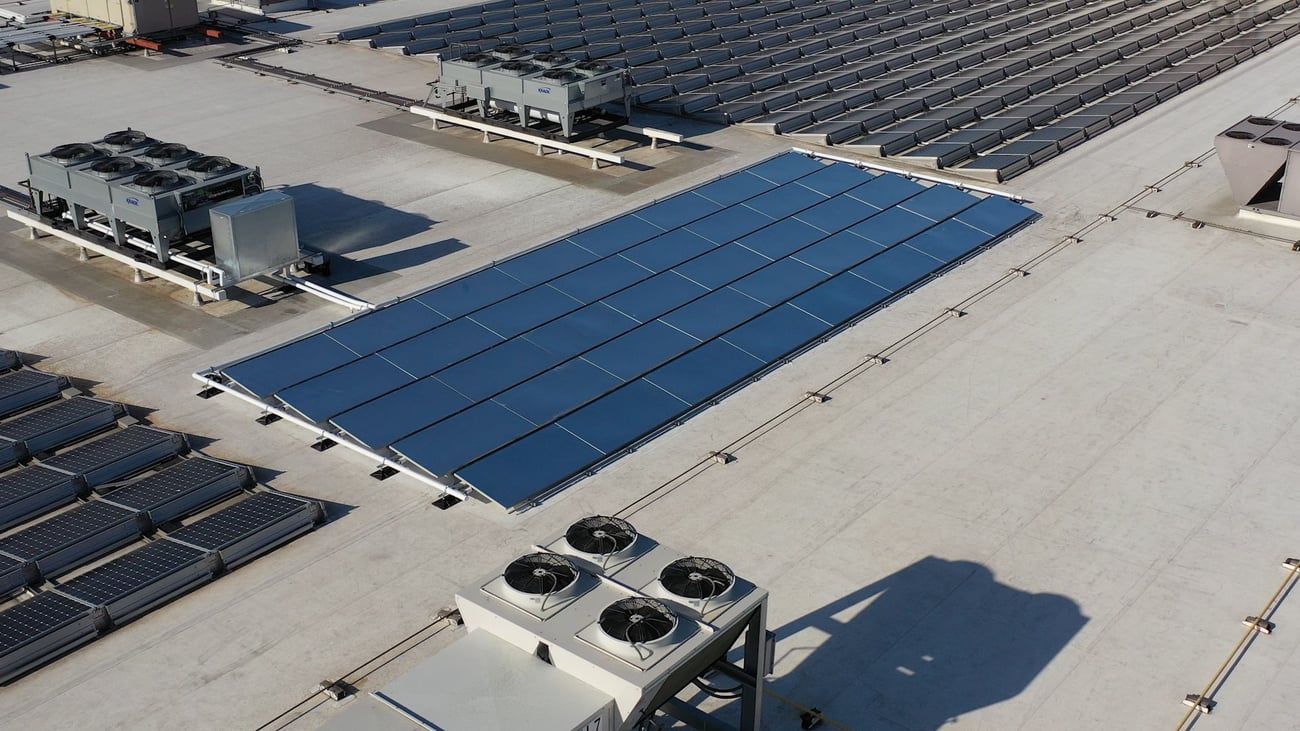
Image: SkyCool Systems’ passive cooling panels atop an industrial building. (Source: SkyCool Systems, CNN)
Companies like SkyCool Systems, Thermoshade, Chill Skyn, and Pirta are already commercializing the technology across panels, coatings, and paints. Meanwhile, researchers are pushing into the next frontier: wearable PDRC textiles and personal protective equipment for heat-exposed workers.
Our forthcoming report on Resilience Game Changers will map the broader landscape of hard-tech academic research and development relevant to adaptation and resilience and examine pathways to commercialization. Reach out to share a technology you think we should feature!
|
|
|
|
What We’re Reading
|
|
|
|
|
|
|
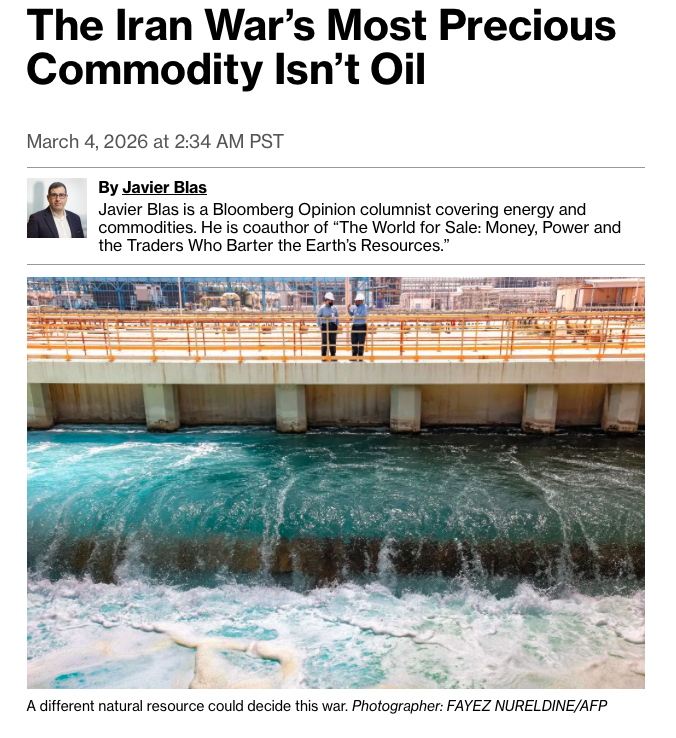
This op-ed highlights how the Middle East’s climate shapes its geopolitical vulnerabilities, particularly in terms of its dependence on desalination plants for water. It quotes a leaked 2008 memo noting that the plants’ destruction “could have severe consequences, such as forcing Riyadh to evacuate within a week if the Jubail desalination plant is damaged.” On March 8th, The New York Times reported direct strikes on two desalination plants in the region.
|
|
|
|
|
|
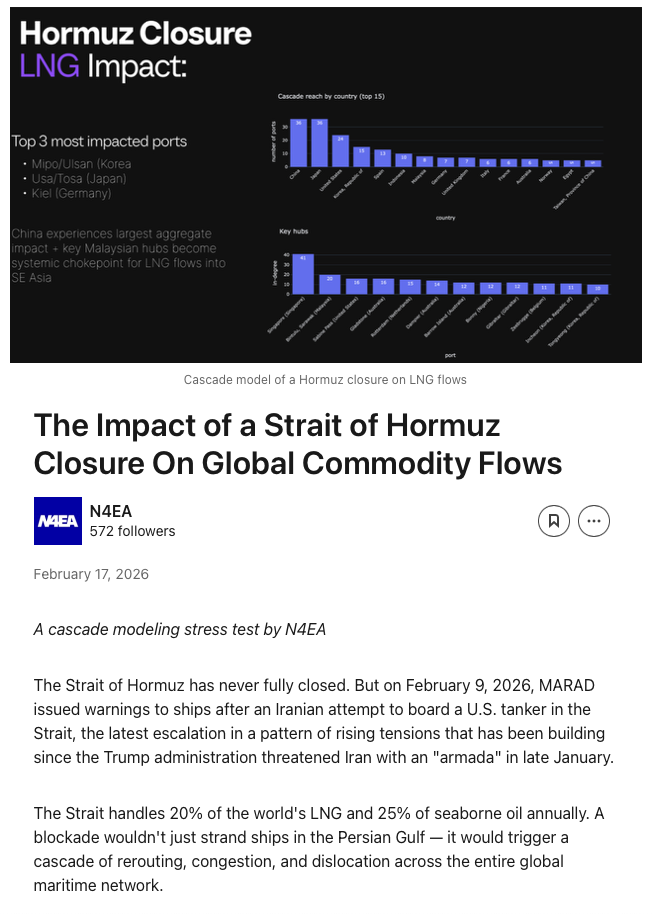
Supply chain risk analytics startup N4EA modeled the cascading disruption effects of a hypothetical Strait of Hormuz Closure, before the official closure on March 2. There were three key findings: rerouting of LNG would concentrate in ports in Malaysia and Singapore; dry bulk goods would put pressure on India ports; and different types of goods have different cascading effects. This comes as extreme heat hits some Indian ports, which may place additional compounding stress on workers while also threatening heat-sensitive cargo that has longer transit times due to the Strait closure.
|
|
|
|
|
Events We’re Hosting
|
|
Built to Last: Resilience Tech and the Future of Commercial Real Estate (SF Climate Week)
|
|
|
April 22, 2026, 9am-12pm PT in San Francisco + Livestream
Join Tailwind Futures during SF Climate Week for a half-day event examining how technological innovations can improve asset insurability and increase tenant demand. Two panels of investors, startups and insurance experts will explore climate risk’s influence on insurance costs and CRE revenue, and unpack emerging solutions that mitigate risk and boost returns.
|
|
Register
|
|
How Universities Can Work with Investors and Corporations to Bring Resilience Innovation to Market (DC Climate Week)
|
|
|
April 21, 2026 in Washington, DC
Tailwind Futures is co-hosting an executive workshop with Duke University to bring together university innovation offices and researchers, investors and corporations focused on accelerating adaptation and resilience technologies. Tailwind Principal Natalie Ambrosio Preudhomme will present on the adaptation & resilience market opportunity and the role of university-originated innovation, followed by several panels and working sessions examining the path from lab to commercialization. This event is invite-only, Please reach out if you’d like more information or to request an invitation.
|
|
|
Accelerators, Fellowships & Prizes
|
|
|
Apply to be showcased as one of the Trellis 15 Climate Tech Startups to Watch in 2026. The list recognizes early-stage startups innovating in three categories: data center solutions, material innovation, and climate adaptation. Selected startups also get complimentary tickets to Trellis Impact 26, and a chance to pitch live. Apply by March 27.
The Morgan Stanley Inclusive & Sustainable Ventures (MSISV) Accelerator Program supports early-stage startups and nonprofits. Participating startups will receive an equity investment (or a grant for nonprofits), a five-month curated program, mentorship, networking opportunities, dedicated office space and access to a network of seasoned experts and industry leaders. Apply by March 31.
Deel has launched The Pitch, presented by J.P. Morgan, a global startup pitch competition designed for early-stage founders. Up to 10 Global Champions win $1M in investment & up to 100 Regional Winners win $50k in investment.
Application deadlines vary depending on regional location. Deadlines begin in March.
The InnSure Creation Labs Accelerator is seeking early to mid-stage growth companies with impact-focused, innovative risk transfer technology and/or data solutions in risk management. Reach out here.
|
|
Share a Market Update
|
|
|
|
|
|
|
|
|
|
|